
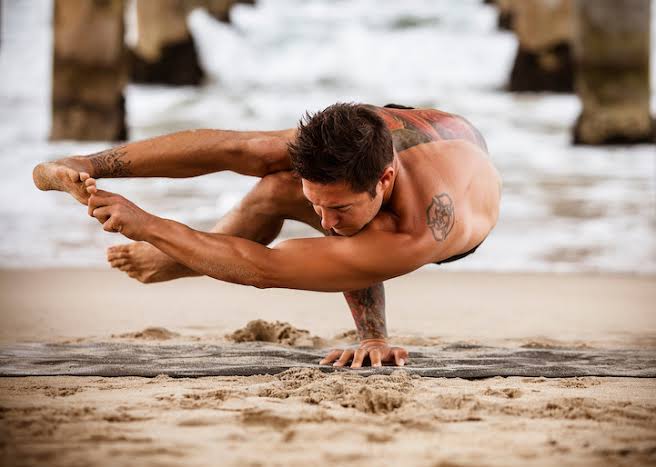
I love yoga.
It looks simple. But anyone who has tried it knows it’s not easy.
It’s not easy to control what needs to be controlled. But it’s also not easy to do the opposite: surrender, relax into discomfort and stop trying to force the pose.
Sometimes relaxing into the pose is the ultimate performance.
I find this psychology fascinating because top performance works in a very similar way.
The higher the stakes become, the more your attachment to the outcome can actually reduce your ability to produce that outcome.
If you’re trying to make your first million, build a serious business, become the best in your field, or do anything where the stakes eventually become high, sooner or later one sales call, negotiation, hire, launch or decision starts to feel disproportionately important.
And that’s exactly when your performance can deteriorate.
There’s a saying in negotiations that the person who needs the deal the most has already lost.
There is a huge difference between wanting a deal and needing a deal.
Imagine I need to close a €10M deal.
If I want the deal, I can prepare obsessively. Ask hard questions. Push. Challenge the client. Negotiate. Walk away if the terms are wrong.
I can do everything I know how to do to get the deal. But I don’t need it.
The moment I need the deal, something changes.
Maybe I avoid the hard question because I don’t want to upset them. I discount too early. I talk too much. I interpret every objection as danger. I stop being curious because I’m trying to control the outcome.
Ironically, needing the €10M can make me worse at getting the €10M. The skill is the same. The psychology is different.
I see the same thing with leaders and business owners.
If this employee has to stay, you tolerate things you normally wouldn’t. If this investor has to say yes, you negotiate differently. Scarcity vs abundance.
And this is something I notice when I coach my top people. The consistent winners understand this subtle dance between control and surrender.
Because completely letting go doesn’t work. You still need discipline, preparation, standards and effort.
But trying to control everything doesn’t work either.
The grip becomes too tight. There’s no room for creativity, mistakes or freedom. There’s just fear and frustration.
I experienced this today in a simple padel match.
I was playing with guys who are at a higher level than me. At first I was completely OK with making mistakes. My self-talk was: “Whether I win or lose, I play my best game.”
And I played well. We won, unexpectedly.
And then, in a small moment, when i realised: we are tied in 2nd match and about to win, I started fearing losing. Instead of going all in, my mind narrowed. Holding on and trying to control my every move and every outcome too tight. Playing too small, fearing risks.
Classic.
What happened next? More mistakes.
Playing not to lose is a losing game. It’s scarcity.
The moment I returned to the feeling that mistakes were allowed, my performance changed again. I could win or lose. My job was simply to give everything I had to the next point. Return to present moment. Return to trust. I didn’t need to win. I needed to play my best game.
It felt familiar because I’ve experienced exactly the same thing while becoming a record breaker in sales or building my business.
It is the same mental game, just with higher stakes. A subtle art of control and detachment.
And surrender doesn’t mean the outcome doesn’t matter. If you want to make a million, the million matters. If you have a business to run, the revenue matters.
But the outcome can matter strategically without controlling you emotionally in the moment.
You can care enormously about reaching €1M while being completely willing to lose this particular deal.
That’s the distinction.
Control your preparation, activity, standards, questions, decisions and effort.
Surrender the individual outcome.
Because what can I actually control?
What’s right here, right now.
If I’m sitting in a sales meeting thinking, “I NEED to close this €10M deal,” I’m mentally living in the future.
If instead I’m thinking, “What is the best question I can ask this person right now?” I’m back in something I can control.
Play to win. Do everything you can to win.
But don’t need to win this one.
For someone trying to get to next level, that’s a real skill.